 E-mail


Use cases
The goal of Petals ESB Deployer is to resolve several deployment problematics:
- how to simplify the deployment of a Petals ESB bus avoiding to use scripts for automating deployment ?
- how to upgrade an existing deployment of a Petals ESB bus to a new version of this Petals ESB bus,
- how to deploy a set of service providers and consumers on different environments, for example DEV, TEST or PROD where the Petals ESB bus topology and external resources are different ?
- how to deploy a Petals ESB bus on different environments, for example STAGING, PRE-PROD, PROD where the Petals ESB bus topology is the same but where machines running Petals ESB bus and external resources are differents ?
Deployment samples
Classic: Different topologies following project progress
In this use case sample, service providers/consumers are deployed on a topology that is different according to the project step: DEV, TEST, PRE-PROD and PROD. Service providers/consumers are the same on each environment, but their instance number can be different.
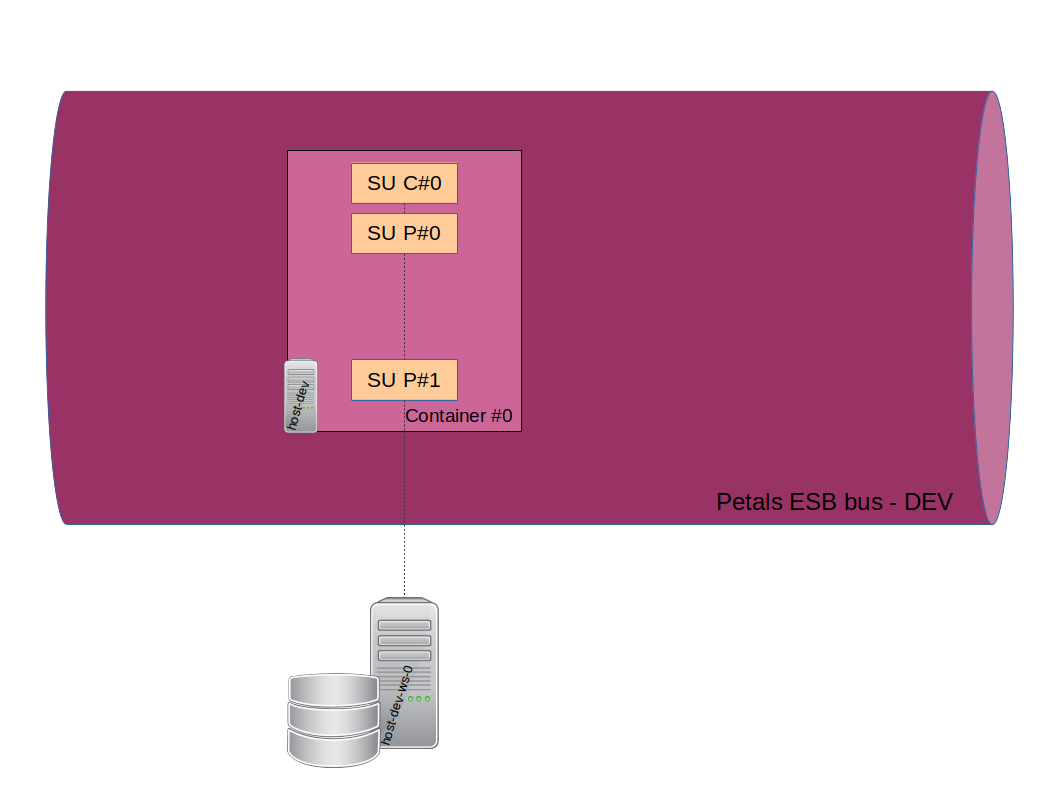
1st step: development
In the first step of a project, developers will use a standalone topology running on their computer as following. The external web-service is provided by ressource host-dev-ws-0 and must be configured at service unit 'SU P#1' level:
2nd step: testing
Once the development is finished, some artefacts are delivered to the team "TEST".
The delivered artefacts are:
- the list of service-unit that must be deployed,
- the service-assemblies or deployable service units as archives to deploy.
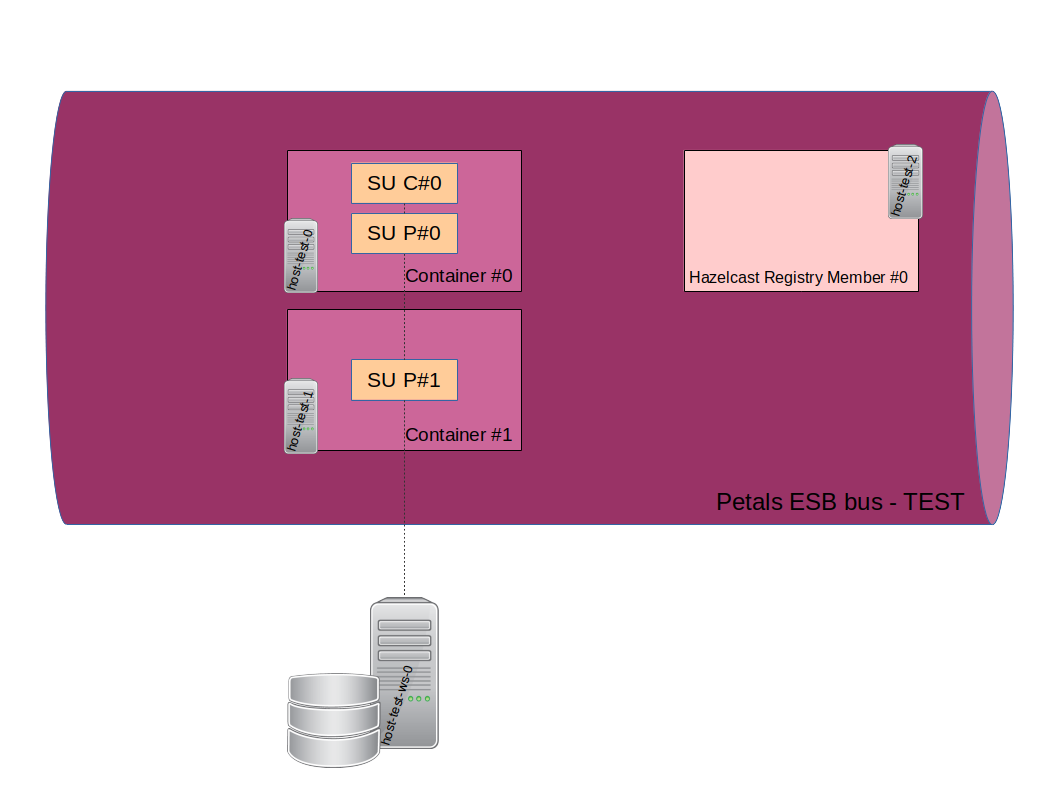
With the Petals ESB architect, the team "TEST" defines a simplified version of the Petals ESB bus topology that will be used for testing. Finally we can have such a topology using machines: - host-test-0 and host-test-1 for both Petals ESB containers,
- host-test-2 for the unique Petals ESB Hazelcast Registry member,
- host-test-ws-0 hosts the external web-service resource that must be configured at service unit 'SU P#1' level.
3rd step: pre-production validation
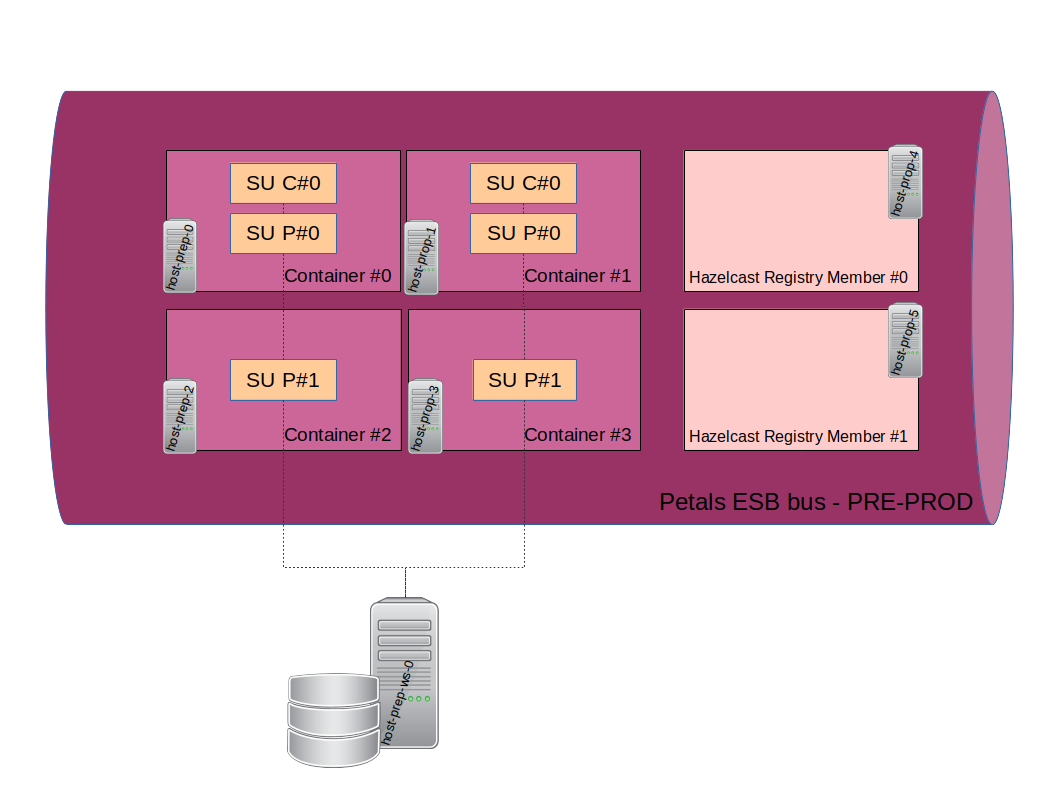
Once tests are passed, we validate deliverables on a pre-production environment for which the Petals ESB bus topology is the same than the production environment. As the pre-production environment is a mirror of the production environnment, this topology was defined by the Petals ESB architect in agreement with production operators. Service units deployed are the same than the one of the testing environment, only machines and few configuration items are different between environments PRE-PROD and PROD. Machines of the pre-production environment are:
- host-prep-0, host-prep-1, host-prep-2 and , host-prep-3 where are running Petals ESB containers,
- host-prep-4 and host-prep-5 where are running the Petals ESB Hazelcast Registry members,
- host-prep-ws-0 hosts the external web-service resource that must be configured at service unit 'SU P#1' level.
4th step: production deployment
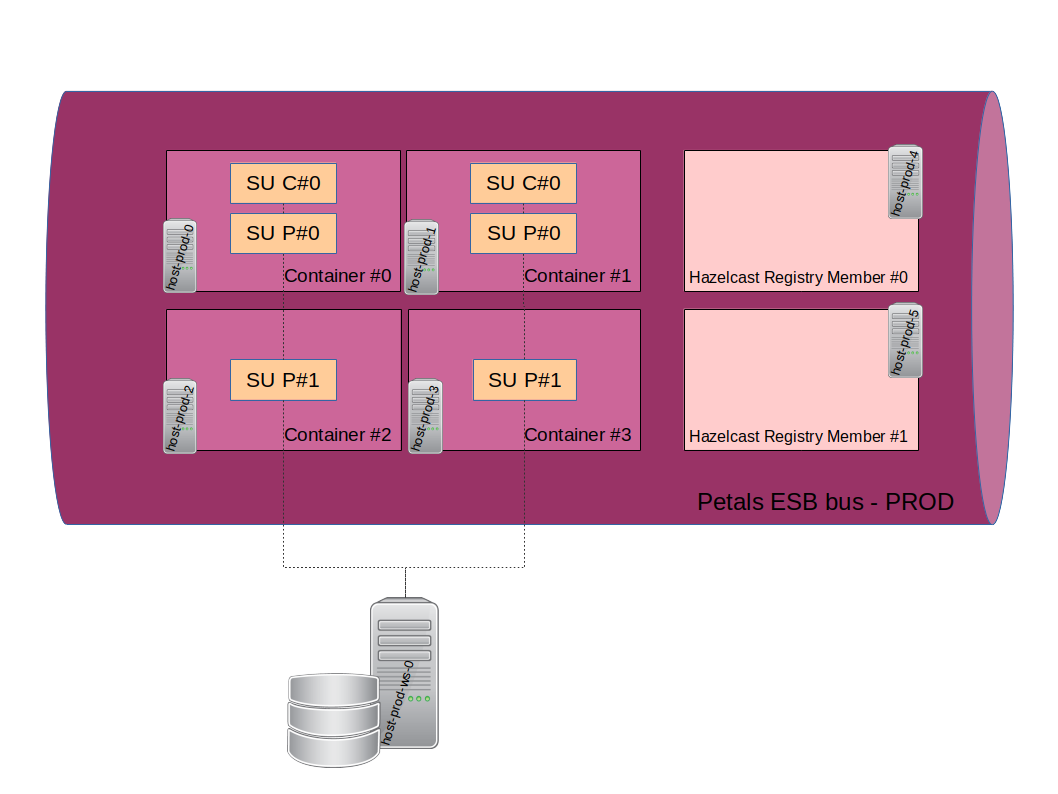
If no problem has been detected in pre-production stage, the project is deployed on the production environment with the same topology and the same service-units than the one of the pre-production environment, except machines and few parameters:
- host-prod-0, host-prod-1, host-prod-2 and , host-prod-3 where are running Petals ESB containers,
- host-prod-4 and host-prod-5 where are running the Petals ESB Hazelcast Registry members,
- host-prod-ws-0 hosts the external web-service resource that must be configured at service unit 'SU P#1' level.
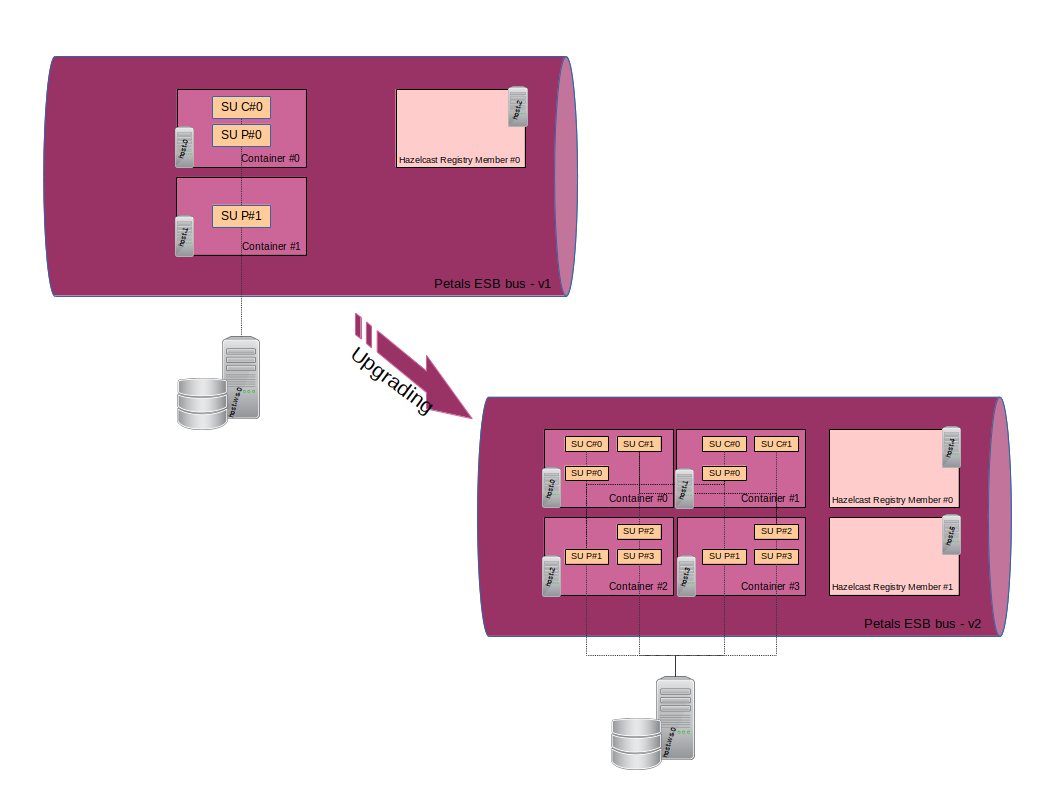
Upgrade of a existing Petals ESB bus
In this use case sample, a Petals ESB bus is already deployed, and we want to upgrade it to a new version where:
- a new set of service-units must be deployed, including:
- some service-units to upgrade,
- some new service-units to deploy,
- some existing service-units to undeploy,
- and/or the topology can also be upgraded.
Modeling your deployments
Model overview
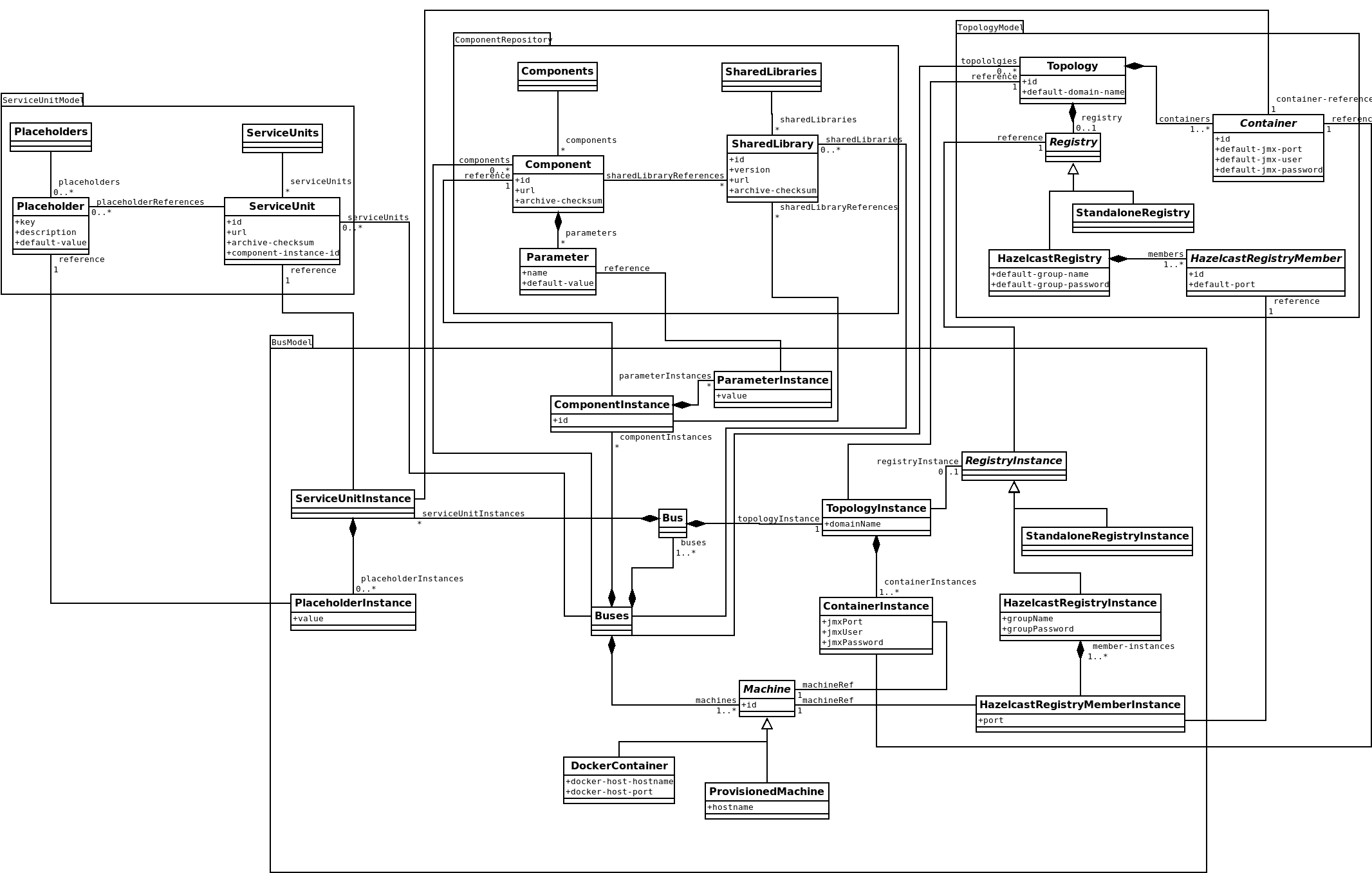
Petals ESB Deployer is based on a model defining your Petals ESB bus to deploy. This model contains all components and their configurations forming your Petals ESB bus.
The model of your Petals ESB bus is composed of several parts:
- a Service-units Object Model: that list all service-units that must be deployed into your Petals ESB bus,
- a Topology Object Model: that defines the topology of your Petals ESB bus,
- a Bus Object Model that defines:
- where are running the service-units, on which Petals ESB container of your topology,
- where are running your Petals ESB containers, on which machine,
- where are running your Petals ESB Hazelcast Registry nodes, on which machines,
- which external resources are to be used.
Service-units Object Model
This model defines the set of service units to deploy on your Petals ESB bus. This model will be mainly written by development teams because they have the knowledge of service units to deploy.
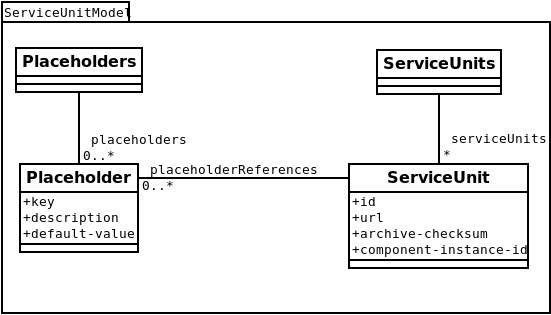
This model is composed of following elements:
- service-units, the list of service units that must be deployed,
- service-unit, one service unit to deploy:
- id, the identifier of this service-unit in the model. Can be different from the service unit name,
- url, the URL of the associated archive that can be a service assembly or a deployable service unit.
- placeholders, the set of placeholders that the service unit requires for its execution,
- placeholder, a placeholder required by a service-unit:
- key, the place holder name as used in the service-unit. A value is associated to this placeholder in the bus object model.
Topology Object Model
This model defines the topology of your Petals ESB bus. This model will be mainly written by the Petals ESB bus architect.
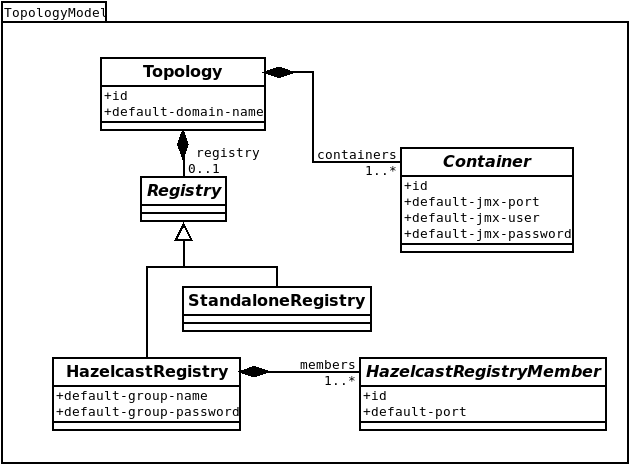
This model is composed of following elements:
- topology, the topology definition of your Petals ESB bus, with:
- containers, its different Petals ESB containers as a list of container,
- registry, the registry used in your topology. Optional.
- container, a Petals ESB container member of your topology:
- id, identifier of the Petals ESB container as used as name in the file topology.xml,
- standalone-registry, the registry is implemented by Petals ESB Standalone Registry, default implementation for a standalone topology. Can not be used for a distributed topology,
- hazelcast-registry, the registry is implemented by Petals ESB Hazelcast Registry, default implementation for a distributed topology:
- members, the members of the Petals ESB Hazelcast Registry,
- hazelcast-registry-member, a member of the Petals ESB Hazelcast Registry:
- id, identifier of the Petals ESB Hazelcast Registry member as used as name in the file cluster.xml,
Bus Object Model
This model defines your Petals ESB bus. This model will be mainly written by the Petals ESB bus architect in agreement with operators.
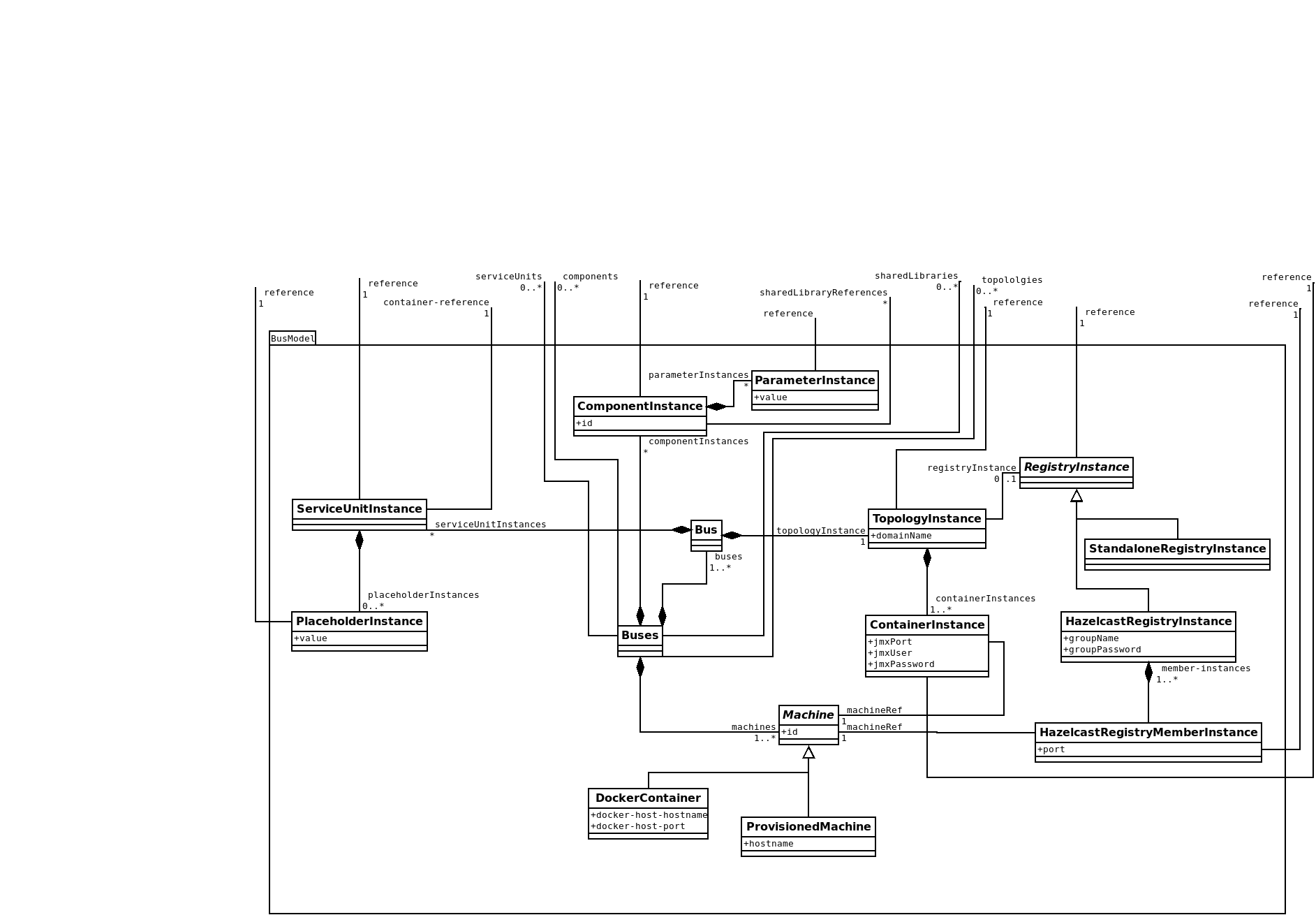
This model is composed of following elements:
- Bus, the Petals ESB bus to deploy, with:
- service-units, the service units to deploy,
- registry-instance, the instance of the registry to used in the topology,
- container-instances, the instances of Petals ESB containers forming the Petals ESB bus,
- machines, a list of machine on which the current Petals ESB bus is running,
- machine, a machine on which a part of the Petals ESB bus is running:
- id, identifier of the machine used as reference key for container-instance and {{hazelcast-registry-member-instance},
- several types of machines are supported:
- provisioned-machine, a provisioned machine as a physical machine or a virtual machine already existing:
- hostname, hostname or IP address of the current provisioned machine,
- docker-container, a Docker container running a Petals ESB component:
- docker-host-hostname, hostname of the Docker host on which the Docker container will be started,
- docker-host-port, port of the Docker daemon of the Docker host on which the Docker container will be started,
- provisioned-machine, a provisioned machine as a physical machine or a virtual machine already existing:
- container-instance, the instance of a Petals ESB container defined in the topology model:
- reference, reference to a container of the topology object model,
- host-machine, the reference of the machine on which the current Petals ESB Container is running,
- jmxPort, port JMX of the current Petals ESB container,
- jmxUser, JMX username of the current Petals ESB container,
- jmxPassword, JMX password of the current Petals ESB container,
- service-unit-instance, an instance of a service unit running on a Petals ESB container:
- reference, reference to a service-unit of the service-units object model,
- container-reference, reference to a container of the topology object model,
- placeholders, the set of placeholder-instance that must be applied to the current service-unit instance to set the right placeholder values,
- placeholder-instance, an instance of placeholder to define its value:
- reference, reference to a placeholder of the service-units object model,
- value, value to set to the current placeholder,
- hazelcast-registry-instance defines the registry instance of the current Petals ESB bus as a Petals ESB Hazelcast Registry instance:
- reference, the reference of the Petals ESB Hazelcast Registry in the topology object model,
- group-name, name identifying the Petals ESB Hazelcast Registry instance inside the Hazelcast cluster,
- group-password, password of the Petals ESB Hazelcast Registry instance,
- member-instances, list of member instances (hazelcast-registry-member-instance) composing the current Petals ESB Hazelcast Registry instance,
- hazelcast-registry-member-instance, a member of the current Petals ESB Hazelcast Registry instance:
- reference, the reference of the member of the Petals ESB Hazelcast Registry in the topology object model,
- host-machine, the reference of the machine on which the current Petals ESB Hazelcast Registry is running,
- port, the communication port of the current member instance.
Writing your deployment model
The best practice is to write your deployment model with different files, but you are able to write your deployment model in only one file.
Writing your deployment model in separated files
The best practice is to write your deployment model with different files:
- a 1st file for your service units object model, written by your development team,
- a 2nd file for your topology object model, written by the Petals ESB architect,
- and a 3rd file for your bus object model, written by the Petals ESB bus architect in agreement with operators.
Writing a service units object model
Example of a service unit object model:
<service-units xmlns="http://petals.ow2.org/deployer/models/service-units.om/1.0" targetNamespace="http://petals.ow2.org/deployer/sample.suom">
  <service-unit id="su-filetransfer-consume">
    <url>mvn://org.ow2.petals.samples.filetransfer/su-filetransfer-consume/4.1.0-1.0.0</url>
  </service-unit>
  <service-unit id="su-filetransfer-provide">
    <url>mvn://org.ow2.petals.samples.filetransfer/su-filetransfer-provide/4.1.0-1.0.0</url>
  </service-unit>
</service-units>
Writing a topology object model
Example of a standalone topology object model:
<topology xmlns="http://petals.ow2.org/deployer/models/topology.om/1.0" targetNamespace="http://petals.ow2.org/deployer/sample-standalone.tom">
  <containers>
    <container id="cont-0" />
  </containers>
</topology>
Example of a distributed topology object model:
<topology xmlns="http://petals.ow2.org/deployer/models/topology.om/1.0" targetNamespace="http://petals.ow2.org/deployer/sample-distributed.tom">
  <containers>
    <container id="cont-0" />
    <container id="cont-1" />
  </containers>
  <hazelcast-registry>
    <members>
      <member id="hzlreg-0" />
    </members>
  </hazelcast-registry>
</topology>
Writing a bus object model
Example of a bus based on a standalone topology:
<bus
  xmlns="http://petals.ow2.org/deployer/models/bus.om/1.0"
  xmlns:suom="http://petals.ow2.org/deployer/sample.suom"
  xmlns:tom="http://petals.ow2.org/deployer/sample-standalone.tom"
  targetNamespace="http://petals.ow2.org/deployer/sample-standalone.bom">

  <!-- Import of the service unit object model -->
  <import namespace="http://petals.ow2.org/deployer/sample.suom" location="sample.suom"
      importType="http://petals.ow2.org/deployer/models/service-units.om/1.0">
  <!-- Import of the topology object model -->
  <import namespace="http://petals.ow2.org/deployer/sample-standalone.tom" location="sample-standalone.tom"
      importType="http://petals.ow2.org/deployer/models/topology.om/1.0">

  <machines>
    <provisioned-machine id="machine-00">
      <hostname>machine-00.petals.org</hostname>
    </provisioned-machine>
  </machines>

  <container-instances>
    <container-instance ref="tom:cont-0" machine-ref="machine-00" jmx-port="7700" jmx-user="petals" jmx-password="petals"/>
  </container-instances>

  <service-unit-instances>
    <service-unit-instance ref="suom:su-filetransfer-consume" container-ref="tom:cont-0" />
    <service-unit-instance ref="suom:su-filetransfer-provide" container-ref="tom:cont-0" />
  </service-unit>
</bus>
Example of a bus based on a distributed topology:
<bus
  xmlns="http://petals.ow2.org/deployer/models/bus.om/1.0"
  xmlns:suom="http://petals.ow2.org/deployer/sample.suom"
  xmlns:tom="http://petals.ow2.org/deployer/sample-distributed.tom"
  targetNamespace="http://petals.ow2.org/deployer/sample-standalone.bom">

  <!-- Import of the service unit object model -->
  <import namespace="http://petals.ow2.org/deployer/sample.suom" location="sample.suom"
      importType="http://petals.ow2.org/deployer/models/service-units.om/1.0">
  <!-- Import of the topology object model -->
  <import namespace="http://petals.ow2.org/deployer/sample-distributed.tom" location="sample-distributed.tom"
      importType="http://petals.ow2.org/deployer/models/topology.om/1.0">

  <machines>
    <provisioned-machine id="machine-00">
      <hostname>machine-00.petals.org</hostname>
    </provisioned-machine>
    <provisioned-machine id="machine-01">
      <hostname>machine-01.petals.org</hostname>
    </provisioned-machine>
    <provisioned-machine id="machine-02">
      <hostname>machine-02.petals.org</hostname>
    </provisioned-machine>
  </machines>

  <hazelcast-registry-instance group-name="default-sample" group-password="s3cr3t">
    <hazelcast-registry-member-instances>
      <hazelcast-registry-member-instance machine-ref="machine-02" port="7900" />
    </hazelcast-registry-member-instances>
  </hazelcast-registry-instance>

  <container-instances>
    <container-instance ref="tom:cont-0" machine-ref="machine-00" jmx-port="7700" jmx-user="petals" jmx-password="petals"/>
    <container-instance ref="tom:cont-1" machine-ref="machine-01" jmx-port="7700" jmx-user="petals" jmx-password="petals"/>
  </container-instances>

  <service-unit-instances>
    <!-- Service unit deployed on container 'cont-0' -->
    <service-unit-instance ref="suom:su-filetransfer-consume" container-ref="tom:cont-0" />
    <service-unit-instance ref="suom:su-filetransfer-provide" container-ref="tom:cont-0" />

    <!-- Service unit deployed on container 'cont-1' -->
    <service-unit-instance ref="suom:su-filetransfer-consume" container-ref="tom:cont-1" />
    <service-unit-instance ref="suom:su-filetransfer-provide" container-ref="tom:cont-1" />
  </service-unit>
</topology>
Writing your deployment model in only one file
Example of a bus based on a standalone topology:
<bus
  xmlns="http://petals.ow2.org/deployer/models/bus.om/1.0"
  xmlns:tns="http://petals.ow2.org/deployer/sample-standalone.bom"

  targetNamespace="http://petals.ow2.org/deployer/sample-standalone.bom">

  <suom:service-units xmlns:suom="http://petals.ow2.org/deployer/models/service-units.om/1.0">
    <service-unit id="su-filetransfer-consume">
      <url>mvn://org.ow2.petals.samples.filetransfer/su-filetransfer-consume/4.1.0-1.0.0</url>
    </service-unit>
    <service-unit id="su-filetransfer-provide">
      <url>mvn://org.ow2.petals.samples.filetransfer/su-filetransfer-provide/4.1.0-1.0.0</url>
    </service-unit>
  </suom:service-units>

  <tom:topology xmlns:tom="http://petals.ow2.org/deployer/models/topology.om/1.0">
    <containers>
      <container id="cont-0" />
    </containers>
  </tom:topology>

  <machines>
    <provisioned-machine id="machine-00">
      <hostname>machine-00.petals.org</hostname>
    </provisioned-machine>
  </machines>

  <container-instances>
    <container-instance ref="tns:cont-0" machine-ref="machine-00" jmx-port="7700" jmx-user="petals" jmx-password="petals"/>
  </container-instances>

  <service-unit-instances>
    <service-unit-instance ref="tns:su-filetransfer-consume" container-ref="tns:cont-0" />
    <service-unit-instance ref="tns:su-filetransfer-provide" container-ref="tns:cont-0" />
  </service-unit>
</bus>
Petals Deployment Model
Source code
Maven project work in progress (POC ?)
Example project
Here is a project to try making deployment model for an existing project (with script CLI)